
Cold Pursuits
Bucket list adventures at the top and bottom of the world
BY HINSDALE MAGAZINE GROUP STAFF
There are few journeys left on Earth that feel as bold — or as brag-worthy — as a trip to the planet’s frozen extremes. The North and South Poles are still the stuff of explorers and adventurers. Yet these icy realms are more accessible than ever, and those willing to trade tropical beaches for glaciers and midnight sun are rewarded with some of the most spectacular sights and stories on the planet.
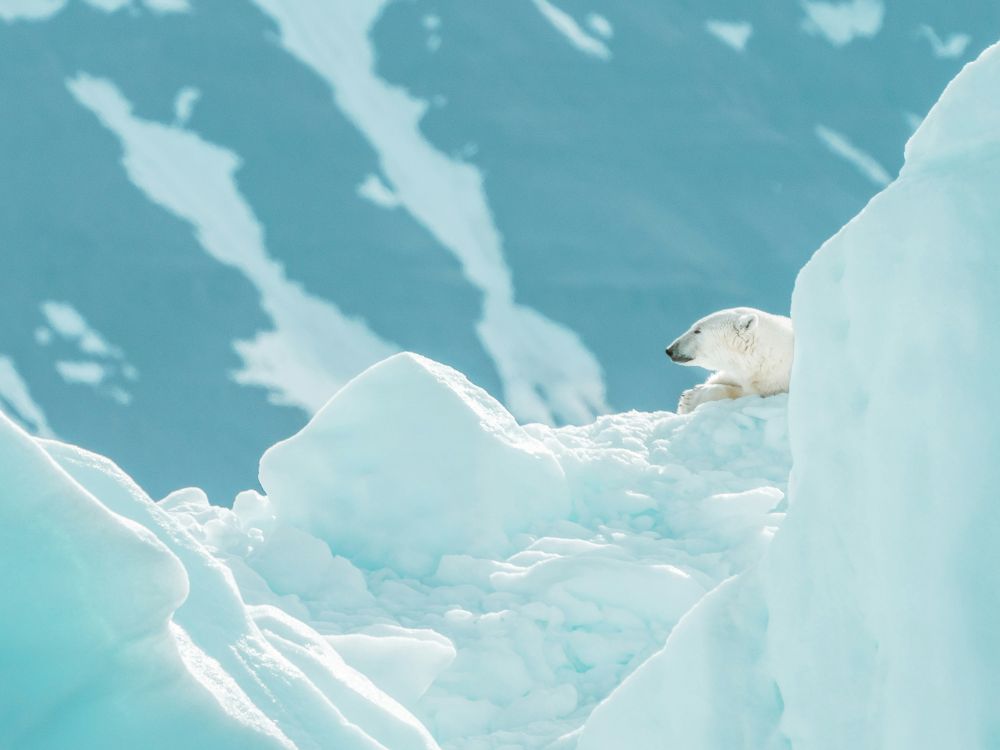
At first glance, the poles might seem like mirror images. Two icy worlds defined by snow, silence, and solitude. But they couldn’t be more different. The Arctic, home to the North Pole, is not a continent at all but a floating sheet of sea ice atop the Arctic Ocean. Its frozen surface shifts and cracks with the seasons, fringed by rugged landmasses like Greenland, Canada, and Svalbard. Here, life thrives despite the cold. Polar bears patrol the ice floes in search of seals, Arctic foxes dart across the snow, and herds of caribou and reindeer trek across tundra that bursts with wildflowers in the brief polar summer. Offshore, narwhals glide through icy waters while beluga and bowhead whales breach in the frigid sea.
The Antarctic
Photo by Tam Minton
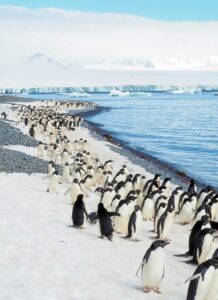
The Antarctic, Earth’s South Pole, is the opposite: a massive continent buried under an ice sheet more than a mile thick, surrounded by the coldest, windiest ocean on Earth. No polar bears roam here, but instead, vast colonies of penguins — Adélie, gentoo, and the iconic emperor — shuffle along the ice. Leopard seals and elephant seals haul out on snowy beaches, while humpback and minke whales feed in the nutrient-rich waters offshore. The skies are alive with seabirds like skuas and petrels, and the occasional wandering albatross.
Travelers drawn north usually set off from Norway, Greenland, or northern Canada on sturdy expedition ships or icebreakers, carving paths through shifting pack ice. The Arctic summer, from June to August, brings nearly 24 hours of daylight, with temperatures often hovering around 32°F — brisk but surprisingly bearable. During these months, travelers can kayak between icebergs, hike on the tundra under the endless sun, and even visit remote Indigenous communities that have thrived in the region for centuries. And if luck is on your side, you might witness the ethereal glow of the northern lights in early or late season.
The journey south begins differently. Most Antarctic expeditions depart from Ushuaia, Argentina, located at the southernmost tip of South America, and cross the legendary Drake Passage before reaching the icy shores. The Antarctic summer runs from November to March, when temperatures on the peninsula hover around 20°F and daylight reigns almost continuously. Conditions are harsher and more unpredictable than in the Arctic, but the rewards are unmatched: zodiac landings on untouched beaches, hikes among nesting penguins, and the chance to watch glaciers calve, forming new icebergs. Some travelers even dare a polar plunge, leaping into waters barely above freezing — a thrill you’ll never forget.
At the very ends of the Earth, life persists in spectacular ways. Are travels there on your bucket list?
The Two Poles Club
If you make it to both the Arctic and the Antarctic, you’ve joined one of the most exclusive travel circles on Earth: The Two Poles Club. This informal but widely recognized milestone celebrates those who’ve stood at both the top and bottom of the planet — a feat accomplished by only a few thousand travelers worldwide. For the truly ambitious, there’s the Three Poles Challenge, which adds the summit of Mount Everest to the mix. Visiting all three earns your place in this rarefied club, which means you’ve touched Earth’s most extreme edges — and lived to tell the tale.
