
Historic St. John’s Church
A landmark that has evolved over a century and a half with roots remaining intact
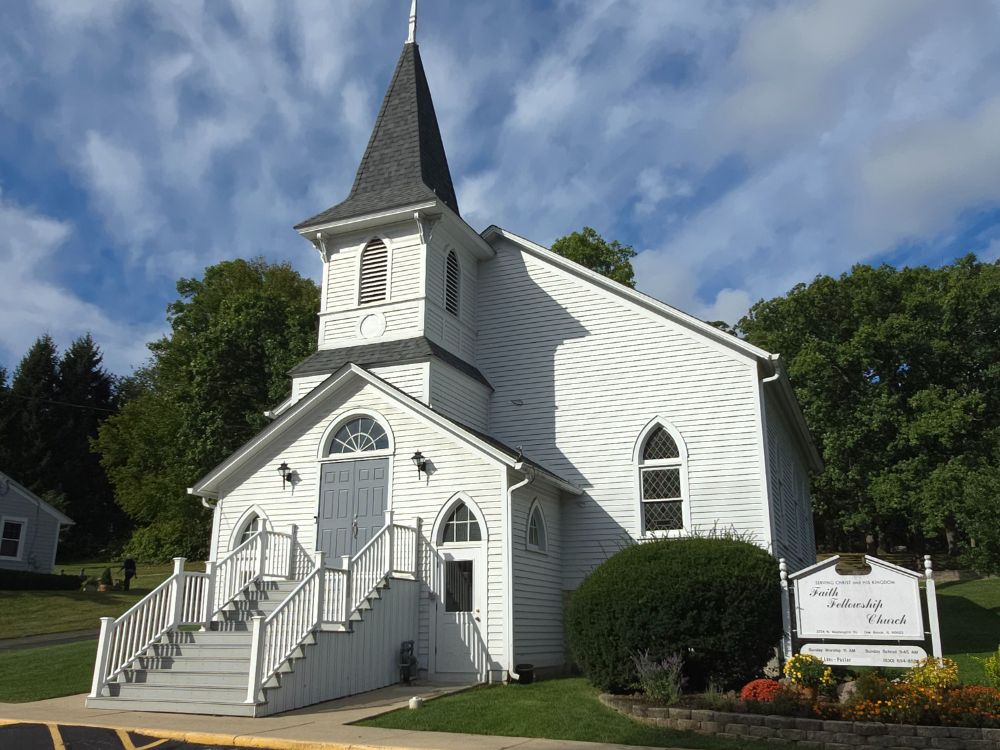
The next time you drive the stretch of York Road between Ogden and 31st Street, notice the antique-looking church building on Washington Street near Fullersburg Woods. At first glance, historic St. John’s Community Church – located on the town’s first cemetery – looks straight off a postcard of New England.
While the building itself is rather simple, the style is a large part of its charm. A few different congregations have passed through the doors of historic St. John’s Church and called it their own in its nearly century and a half existence.
In the autumn of 1877, a group of farmers who had been members of the Proviso Lutheran Church located at 22nd St and Wolf Road, began to establish a non-denominational church. As German settlements sprang up in the area, services were conducted in the German language at the Fullersburg schoolhouse. A year later, they organized into the Vereinigte Evangelisch St. Johannes Gemeinde (United Evangelical St. John’s Congregation).
Two years later, church elders purchased five acres for a cost of $400. The building was dedicated in 1881. Reverend Friedrich Boeber – also a physician – served as the first pastor. Thirteen years later, a tower was added to the church. While Zion Lutheran Congregation had also established itself by 1888 at the corner of Second and Vine Streets, many Germans stayed at St. John’s Church.
A schoolhouse with quarters for the pastor was built near St. John’s in 1892. Soon after, the church became a member of the Evangelical Synod of North America. From the 1890s through 1943, the church became a beacon of community for this area. Many came to establish roots within the congregation, first marrying here, then baptizing their children. When they were old enough, they attended the parochial school where they gained a strong respect for their Christian faith. The congregation learned to lean on and comfort one another in times of difficulty and loss. Eventually, many were buried in the cemetery on the hill behind the church.
The first half of the century saw many improvements to the historic building, from remodeling to the addition of a new basement and a new parsonage appearing next door to the church. The chancel was remodeled and dedicated. Eventually, as attendance declined, the congregation decided to merge with the Burr Ridge United Church of Christ.
The fall of 1972 saw the first worship service of The Church on the County Line in the historic St. John’s building. Before that, the congregation had been meeting in various homes of congregation members and eventually at the Community House in Hinsdale, which became problematic due to noise and distractions. A concerned board member learned of the availability of the historic St. John’s. The following year, the congregation of the Church on the County Line welcomed 15 former members of the congregation of the former St. John’s Church. Dr Millard Scherich, who had recently retired from Wheaton College, became the full-time pastor.
The new congregation made many restorations and rehabilitations to the building and property. In 1983, the congregation celebrated the payment in full to previous property owners and banks. A new organ was installed, pews refinished, and new pew Bibles dedicated. For years, the church hosted a weekly radio program entitled “Heralding the Gospel of Jesus Christ.”
The Church on the County Line feels very blessed to occupy the historic St. John’s Church building. Its members have heavily contributed to self-funded restoration projects and take great pride in the building as well as the land on which it stands. Drive by the next time you’re in the area and take a moment to appreciate this important piece of history.
