
The Real-Life Overlook Hotels Shine On
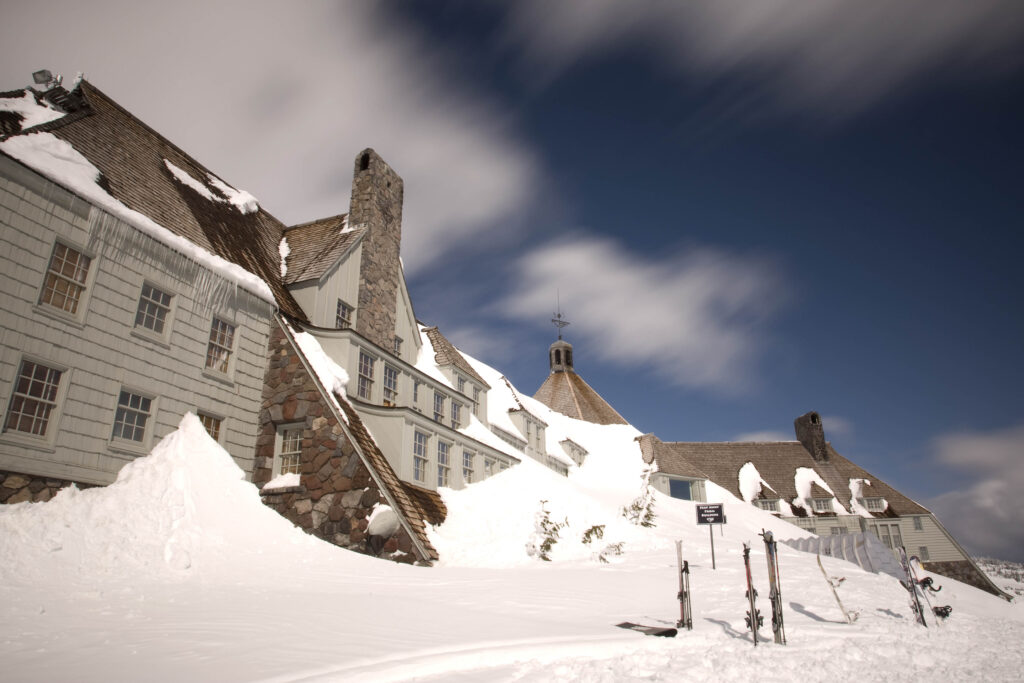
No evidence of Red Rum at the Stanley Hotel or Timberline Lodge
“…..we all shine on, like the moon and the stars and the sun….” It’s likely John Lennon had no idea his song, “Instant Karma,” would inspire the title of one of the most iconic films of the 1980s: Stephen King’s The Shining, directed by Stanley Kubric.
One autumn evening in the 70s, King and his wife stopped unexpectedly at The Stanley Hotel near Rocky Mountain National Park. The couple was almost turned away as the staff was packing up to close for the season the next day. They were offered a choice of the only two menu items left in the dining room. After a brief chat with Lloyd, the bartender, the Kings adjourned to room 217. (The haunted room number was changed to 237 for the movie – a room number that doesn’t exist in the hotel).
That evening, King had a vivid nightmare involving his young son being chased through the hotel’s empty hallways. He awoke with the entire plot of The Shining in his head. The storyteller penned his cult classic over the next four months, based on his disturbing dream. The result was a novel with themes that examine cabin fever and the human fear of isolation. The title refers to the psychic ability to “shine,” or connect with others who are not there, on a cognitive level.
The Shining became King’s first hardcover bestseller.
The Stanley was the inspiration for the haunted hotel, which also became a sort of character in its own right. Actual filming took place on a sound stage in England in the late 70s; however, a made-for-TV version of The Shining was filmed at The Stanley in the 90s.
The Timberline Lodge on Mount Hood, Oregon, served as the exterior persona of the inn. Nestled in Mount Hood’s National Forest, it provided a perfect setting – a deserted resort, empty until spring. If you’re looking for the mysterious, haunted outdoor hedge Jack got lost in at the film’s conclusion, however, you’ll be disappointed to learn it was only part of the set. The Stanley, however, built a labyrinth on its property a few years back, after many requests by movie fans.
Having stayed at both distinct historic properties, each had interesting personalities of their own before they became part of King’s icon. Either makes a fine choice for a getaway, but neither has forgotten its legacy. As a constant reminder, both hotels show The Shining on a 24-hour loop in case you’re up for a scare this fall season!
The Timberline Lodge, Government Camp, Oregon
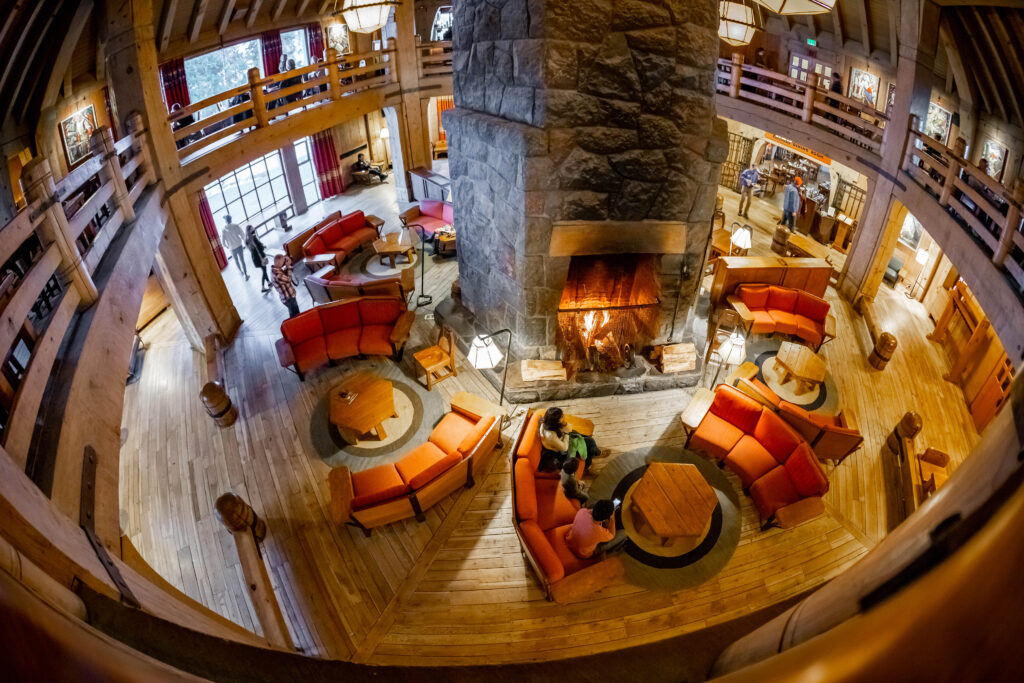
The Timberline Lodge lobby’s two-story fireplace
Long, aerial shots of The Timberline Lodge were used in the movie’s opening scene to sell viewers the idea of a deserted resort on the verge of closing for the winter. Winding roads flanked by lakes on a long uphill climb (those shots were from Glacier National Park), led to a desolate setting in the middle of nowhere. It worked for the movie, more than less.
The Timberline Lodge on Mt Hood, Oregon
The real inn is located on Mount Hood’s south slope. While it is primarily a ski lodge, you don’t have to hit the slopes to enjoy this place. The 55,000 square foot mountain retreat is a true testament to its Pacific Northwestern roots. It was built in the 1930s by the Civilian Conservation Corps as part of Roosevelt’s New Deal. The objective was to build a hotel that felt like every Oregonian’s rustic cabin. It worked. A two-story, octagonal lobby anchored by a massive stone fireplace brings the rugged spirit of the outdoors into this enormous -yet cozy- log cabin.
The décor pays tribute to the region’s Native American roots. The Timberline was declared a National Historic Landmark in 1977. Check in the last weekend of October for some frighteningly family-friendly Halloween fun!
The Stanley Hotel, Estes Park, Colorado
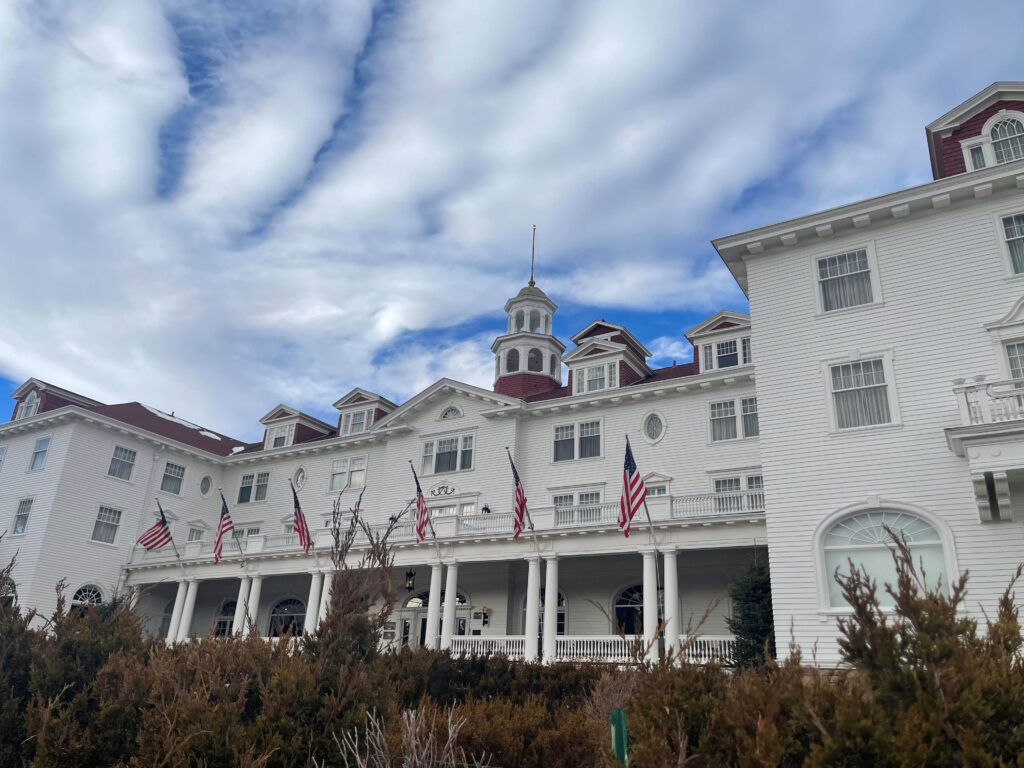
The Stanley Hotel, Estes Park, Colorado
This grand hotel was built in 1904 as the summer residence of Freelan Oscar Stanley and his wife, Flora. Stanley had made his fortune manufacturing photographic plates, but he was best known for his Stanley Motor Carriage Company, which built steam-powered automobiles.
The couple, originally from Maine, had spent a season in the Rockies, searching for respite from Freelan’s tuberculosis. The mountain air had helped his condition, and the couple vowed to return each summer. Used to a sophisticated level of East Coast society living, however, they found no accommodation to suit their taste in the rugged and unsettled American West.
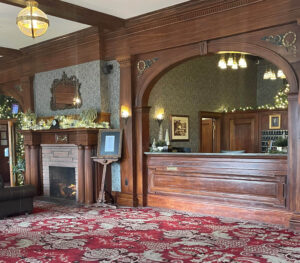
The Stanley Hotel lobby
They built a state-of-the-art hotel with electric lights, telephones, indoor water closets, a well-trained waitstaff at the ready, and, of course, available automobiles – all in a beautifully appointed colonial-style building. East Coasters flocked to the new resort in the Rockies.
By the time King and his wife stopped here, some seven decades later, the hotel’s grandeur had faded. It’s likely the inn would eventually have met with the wrecking ball had it not been for a would-be famous writer – also from Maine – seeking shelter late one evening. Things happen for a reason. King’s masterpiece put The Stanley back on the map. Now, fifty years later, the inn is remodeled, refurbished, and waiting for visitors in search of Red Rum.
